What Is a Charger Plate and How Do You Use One?
If you have ever sat down at a wedding reception and found a large decorative plate already waiting at your place setting, you have met a charger plate. Guests often wonder whether they are meant to eat from it, move it, or leave it where it is. So what is a charger plate, exactly, and how do you use one properly?
A charger plate is an oversized decorative plate that sits underneath the dinnerware rather than holding food itself. It frames the place setting, adds colour and texture, and gives the whole arrangement a finished, layered look. Think of it as the picture frame around the meal.

What is a charger plate used for?
Charger plates do three jobs at once.
The first is decorative. A charger anchors each place setting and stops the table looking sparse before food arrives, which matters most during speeches and photographs, when tables sit empty for long stretches.
The second is practical. Because the charger stays put between courses, it catches spills and crumbs and protects the tablecloths underneath.
The third is structural. A charger gives your venue staff a consistent visual grid to work to, so every setting lines up neatly along a long banquet table.
Why is it called a charger plate?
The name traces back to the Old French word "chargeour", meaning something that carries or bears a load. Historically, chargers were large serving platters used to carry food to the table. The meaning narrowed over time to the underplate we use today, but the name stuck.
How to use a charger plate in your table setting
Placement is simple once you know the sequence.
Set the charger first, centred on each place setting and sitting just in from the edge of the table. Cutlery is then laid to the left and right of the charger rather than on top of it, and your cutlery and serving pieces go in order of use, working from the outside in.
The napkin can sit either on top of the charger or to the left of the forks, depending on how formal you want the setting to feel. Folded cloth napkins placed on the charger create height and are the easiest way to introduce a second colour. A napkin ring finishes the look and stops the fold collapsing before guests arrive.
The entrée or main plate is then placed directly onto the charger once service begins.
What size are charger plates?
Most charger plates measure 33cm across, which is the standard across the Luna range. A dinner plate typically sits around 26cm, so a 33cm charger leaves an even border of roughly 3.5cm showing on every side. That visible rim is the entire point, so avoid pairing a charger with a plate too close to it in diameter.
It is worth confirming plate sizes with your venue or caterer before you order, since crockery varies more than people expect. Square plates work well on round chargers too, and the contrast between the two shapes reads as deliberate rather than mismatched. If your venue uses unusually large plates, a charger will still work, but the border will read as a fine outline rather than a broad frame.
Choosing a colour and material
Metallics remain the most popular choice for weddings. Gold and silver catch candlelight beautifully and work with almost any palette, while glitter and beaded finishes add texture without needing anything extra on the table.
Clear and mirrored chargers suit modern, pared-back settings and let the colour of the linen show through from beneath. For rustic and outdoor events, rattan and timber-look finishes sit naturally alongside hessian and raw linen textures.
Seasonal styling is worth planning early. Red, green and gold designs from the Christmas charger plates and dinner sets range turn an ordinary dining table into something festive with very little effort.
Do you eat off a charger plate?
No, and this is the question guests ask most. A charger is never eaten from directly. Food always arrives on a separate plate placed on top of it.
As for when it goes, convention says the charger is cleared before the main course, or before dessert at more relaxed events. In practice, plenty of Australian venues leave chargers in place for the whole meal, which is perfectly acceptable and saves the wait staff considerable work.
Building the rest of the table
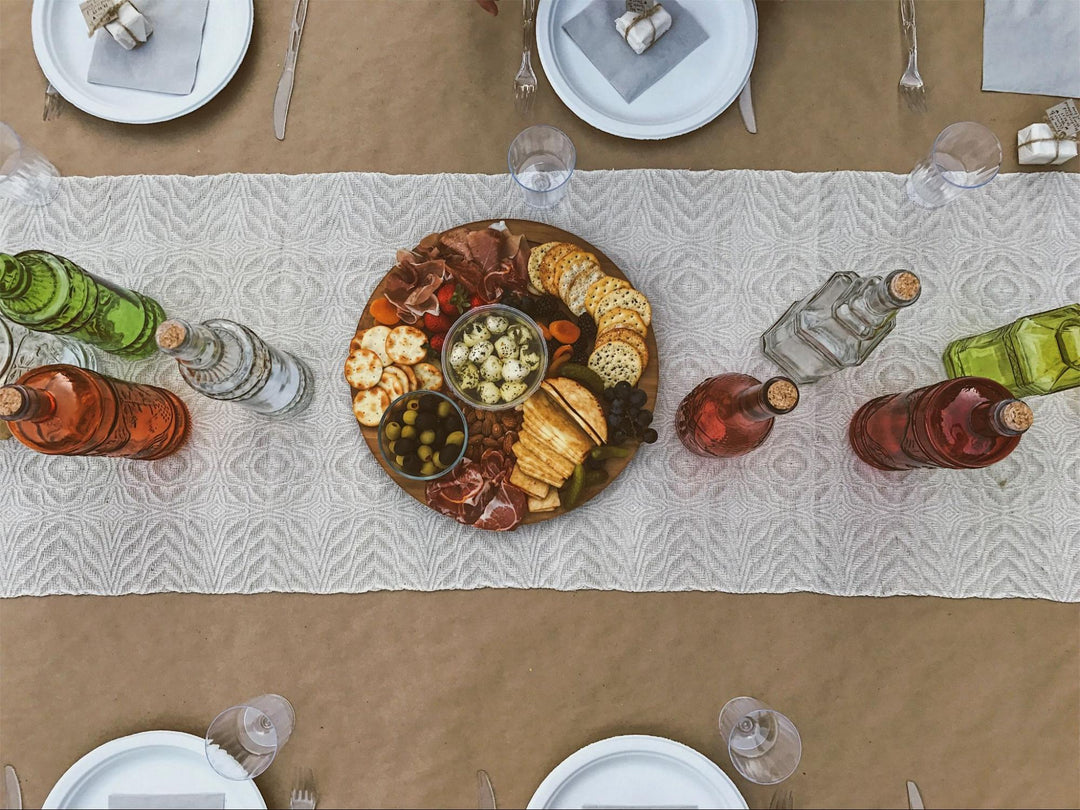
A charger plate rarely works on its own. It sits at the centre of a wider scheme, so think about it alongside your table runners and placemats while you are still planning. A runner down the centre, chargers at each setting and a low centrepiece will give the table depth without crowding it or blocking sightlines across the room.
Charger plates are one of the least expensive ways to lift a table from ordinary to considered. Buying your own set in bulk also means you keep them for future events rather than paying for them again each time. Browse the full charger plates and dinner plate sets range to find a finish that suits your event.
Popular posts